
Laser hair removal: how does it work, what does it cost, and what are the disadvantages?
Laser hair removal is one of the most requested treatments in aesthetic and medical skincare. For many clinics, it is a logical entry-level treatment: demand is high, the results are convincing, and the treatment lends itself well to repeat appointments. However, not every device is suitable for every skin, and not every client gets the result they expect.
As a professional, you want to understand what happens in the skin and hair follicle during laser hair removal, which factors determine the safety and effectiveness of a treatment, and which technology is suitable for different skin and hair types. Additionally, it is important to be able to set realistic expectations regarding the expected results, costs, limitations, and potential risks.
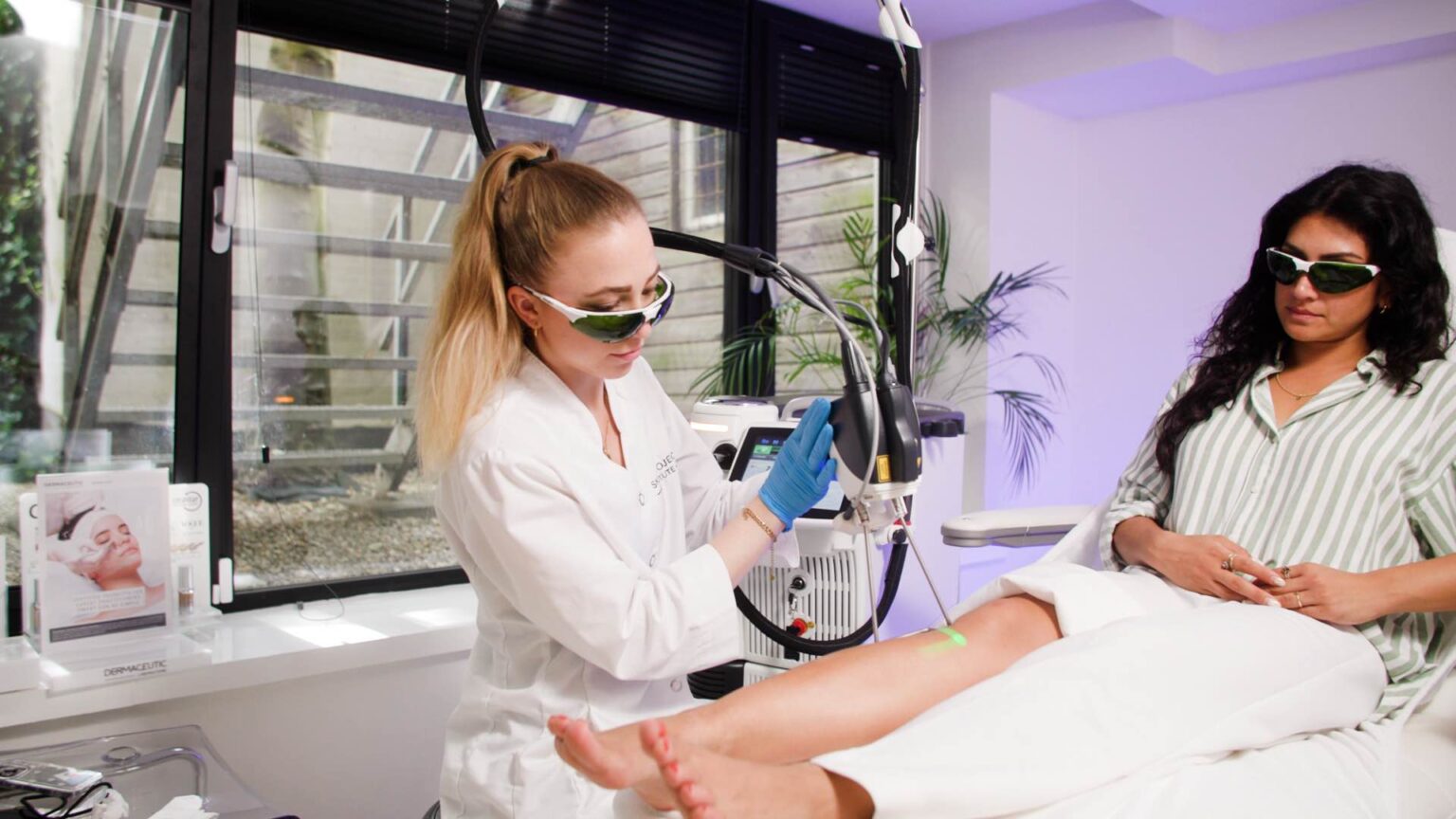
Table of contents
- How does laser hair removal work?
- The main laser types for hair removal
- How much does laser hair removal cost?
- What are the disadvantages and limitations of laser hair removal?
- What does this mean for your practice?
- Frequently Asked Questions (FAQ)
How does laser hair removal work?
The principle: selective photothermolysis
Laser hair removal works via a process called selective photothermolysis. The laser emits light of a specific wavelength that is absorbed by melanin in the pigmented hair and converted into heat. This heat is transferred to the surrounding structures of the hair follicle, with the aim of thermally damaging them sufficiently to permanently reduce hair growth.
For selective heating, it is important that thermal damage to surrounding skin tissue is limited as much as possible. Safe and effective treatments therefore require an appropriate combination of wavelength, pulse duration, fluence, spot size, and cooling, tailored to the client's skin and hair type.
Laser versus IPL: not the same principle
An important distinction that your customers (and sometimes colleagues) do not always know: IPL is not a laser. A laser emits light of one specific, coherent wavelength, whereas IPL (Intense Pulsed Light) works with a broadband light source, typically between 400 and 1200 nanometers.
That broad spectrum makes IPL systems versatile, often with interchangeable filters for different indications, but less targeted and generally less effective than a laser for finer or less pigmented hair.


The main laser types for hair removal
For professional laser hair removal, two laser technologies are dominant, each with its own area of application:
A solid-state laser that is highly effective for fair skin types with dark hair. The relatively short wavelength ensures high melanin absorption, providing efficient results, even on finer and less pigmented hairs. For skin types I–III (sometimes IV), this is the standard in laser hair removal. Read more about the Alexandrite laser here.
A solid-state laser, but with a longer wavelength that penetrates deeper into the skin. Because Nd:YAG light is absorbed less by melanin in the epidermis, this is the safest choice for the darkest skin types (IV–VI) and for heavily pigmented hair. Read more about Nd:YAG lasers here.
More and more modern systems combine both wavelengths in a single device. This makes it possible to safely and effectively treat virtually all Fitzpatrick skin types, and to switch between wavelengths per client or even per season (think of tanned skin in the summer) without changing devices.
At Dalton Medical, you will find these technologies in systems such as the GentleLase Pro-U (Alexandrite), GentleYAG Pro-U (Nd:YAG), the GentleMax Pro and GentleMax Pro Plus combination platforms from Candela Medical , and the AvalancheLase combination platform from Fotona.
For clinics that also want to offer IPL, for example for wider areas or in combination with other indications, a system like Nordlys is a widely used option.
Skin type and hair color determine the result
For laser hair removal, the amount of pigment in both the skin and the hair is important. Melanin in the hair forms the desired target, while melanin in the epidermis can also absorb laser energy.
The choice of treatment parameters, such as wavelength, must therefore be tailored to the individual skin and the degree of pigmentation.
Hair color is at least as decisive: blond, gray, white, and red hair contain little to no melanin, meaning these hairs hardly or do not respond to laser hair removal, regardless of the device chosen.
Comfort and skin cooling
During laser hair removal, the skin must be cooled to protect the epidermis from excessive thermal stress. Adequate cooling also ensures increased treatment comfort.
Depending on the laser system, various cooling techniques can be used for this purpose, such as a cryogenic liquid spray, external air cooling, a fine mist of air and water, or contact cooling.
How much does laser hair removal cost?
Price indication per session
The cost of laser hair removal varies widely, but a session typically ranges between €100 and €300, depending on the size or location of the treatment area. This refers to treatments using professional high-power lasers. Treatment prices can differ significantly from clinic to clinic. In addition to the size of the treatment area, factors such as the practitioner's expertise and experience, the clinic's methods, and the equipment used play a role.
Because hair is in different growth phases and the laser can only effectively treat actively growing hair in the anagen phase, multiple sessions are required. Treatments are performed at intervals, with the intervals tailored to factors such as the anatomical area and the progress of the treatment course.
What determines the price?
A number of factors determine the cost of a session or course of treatment:
An upper lip, back, or full legs requires a completely different amount of treatment time.
Professional high-power lasers differ in wavelength, power, fluence, pulse duration, spot size, and cooling, among other things. These technical characteristics influence the speed, the treatability of various skin and hair types, and ultimately the treatment result.
This varies depending on skin type, hair type, treatment area, and individual hair growth.
A well-trained practitioner can adjust parameters such as fluence, pulse duration, and spot size to skin and hair type. This ensures the most effective treatment possible within safe treatment parameters.
The investment from a practical perspective
For you as a professional, the session price is not the only financial aspect. The purchase of a laser hair removal system is an investment that must pay for itself through a series of treatments. Important considerations in this regard:
- Payback period
A system that can handle many skin and hair types (such as an Alexandrite/Nd:YAG combination) can be used for a larger portion of your client base, which increases the utilization rate and thus the return on investment.
- Packages and subscriptions
Multi-session tracks translate well into package prices, which increases customer value over time (and the predictability of your revenue).
- Second-hand systems
For clinics wishing to start with a more limited budget, Dalton Medical also offers used systems.
Costs compared to other hair removal methods
Compared to shaving or waxing, methods that permanently cost your client money and time, laser hair removal is often more cost-effective in the long run, because it is based on permanent reduction rather than repeated temporary removal.
That story is also valuable for your own clients: the investment in a program outweighs years of costs for waxing appointments or shaving supplies.
What are the disadvantages and limitations of laser hair removal?
No matter how effective laser hair removal is, it is not a miracle cure. For realistic expectation management with your clients, and for safe practice operation, it is important to be clearly aware of the limitations.
With professional laser hair removal, a long-lasting hair reduction of 80% or more can be achieved. However, the actual result varies from person to person and depends on, among other things, the treatment area, skin and hair type, hormonal influences, and the treatment plan followed.
Complete, permanent hair removal does not exist. Moreover, hair with little or no melanin, such as blonde, gray, white, and some red hairs, will respond significantly less well or not at all to the treatments.
- Hormonal Factors can have a very significant influence on the treatment outcome, particularly for hair growth in hormone-sensitive areas such as the face and back. Laser hair removal can treat existing hair growth but does not eliminate any underlying hormonal cause. Furthermore, new hair growth may become visible in the future due to hormonal changes. Existing fine hairs may also become coarser and darker. As a result, additional or regular maintenance treatments may be necessary.
- Light, gray, white, or red hair contain little to no melanin and are therefore difficult or impossible to treat with laser or IPL.
- Dark skin types Ask for the correct wavelength (Nd:YAG) to prevent burning or pigment changes; an incorrectly chosen laser can lead to damage in these skin types.
After treatment, temporary reactions may occur, such as redness and swelling around the treated hair follicles. The skin may also temporarily feel warm or sensitive. Rarer, but possible: mild burns with blisters, and temporary hyper- or hypopigmentation, particularly with incorrect settings or insufficient cooling.
A thorough intake with home care advice for the patient, a careful assessment of the skin and hair, appropriate treatment parameters, and adequate cooling are important to minimize risks as much as possible.
In rare cases, an increase or thickening of hair growth may also be seen after a series of treatments.
Not every client can be treated. Reasons for postponing a treatment include pregnancy, active skin infections or skin damage in the treatment area, recent and intensive exposure or tanning, and the use of certain medications.
Medical conditions and other individual risk factors may also be relevant. A complete medical history and individual assessment prior to treatment therefore remain strictly necessary.
The treatment is often experienced as well tolerated, especially with adequate cooling, but is not completely painless. Sensitivity varies from person to person and depends, among other things, on the treatment area and the density, thickness, and pigmentation of the existing hair growth.
In addition, a complete process requires patience: due to the different growth phases of her hair, multiple sessions spread over several months are needed before the final result is visible.
Communicating this clearly with the customer in advance prevents disappointment and early dropout.
What does this mean for your practice?
Laser hair removal remains one of the most effective and requested treatments in skincare, but the result depends heavily on the choice of the right technology for each skin and hair type, realistic client expectations, and careful execution.
For your practice, this means investing in equipment that can handle a wide range of skin types, and thoroughly informing clients in advance about costs, the treatment plan, and potential side effects.
Unsure which laser system best suits your client base and practice? On the Hair Removal page , you will find an overview of the options, and in the blog Laser Hair Removal Devices for Professionals, we delve deeper into the technical differences between the systems. Do you want to deepen your knowledge further? Also keep an eye on training courses from our Dalton Academy, such as the Candela Academy 2026.
Frequently Asked Questions (FAQ)
A laser emits light of a single specific wavelength, aimed at maximum absorption by melanin. IPL works with a broadband light source across multiple wavelengths. As a result, laser is generally more precise and effective, while IPL is more versatile thanks to interchangeable filters, allowing it to be used for indications other than hair removal.
For light skin types (I–III) with dark hair, an Alexandrite laser (755 nm) is generally the best choice. For dark skin types (IV–VI), an Nd:YAG laser (1064 nm) is safer because it is absorbed less by melanin in the epidermis. Combination systems offer the flexibility to select both wavelengths per client or situation.
On average, six to eight sessions are required, spread over several months. This is because hair is in different growth phases and the laser can only effectively treat hair in the active growth phase (anagen phase). You can read more about the treatment on the Hair Removal page.
No. Laser and IPL hair removal work on the basis of melanin absorption. Blond, grey, white, and red hair contain little to no melanin and therefore respond hardly or not at all to the treatment, regardless of the device used.
Pregnancy, the use of photosensitizing medication, active skin infections in the treatment area, and recent, intense sun exposure are among the main situations in which you must postpone or avoid treatment.
In the Netherlands, laser hair removal is not a reserved act within the meaning of the BIG Act. Consequently, there is no general legal requirement that a practitioner must be, for example, a doctor or skin therapist to perform laser hair removal.
This does not mean that education and competence are unimportant. A professional practitioner can be expected to possess sufficient knowledge of, among other things, laser and light safety, skin and hair assessment, treatment parameters, contraindications, and the recognition and prevention of complications. Depending on the professional group and the setting in which treatment takes place, specific quality frameworks, professional guidelines, and legal obligations may also apply.
Therefore, always check which current requirements and guidelines apply to your professional group and practice.
Consider the skin and hair types of your current and desired client base, the treatment areas you expect to perform frequently, and whether a single system is sufficient or if you need a combination system to safely serve a broader target group. View the complete overview of our systems , or contact us. Our specialists will be happy to advise you on which system best suits your practice.